For the last 20 years, the mining industry has used many types of 3D visualization and 3D animation as part of modern mining operations across the broader mining sector to explain and visualize underground and open pit projects.
A junior mining company could use 3D animation to attract potential investors by visualizing its underground ore bodies to showcase the size of its reserve and resources. It can also support exploration by combining geological mapping, mineral deposits, structure, and 3D ore body models from multiple data sources into one visualization model for resource evaluation, helping engineers identify fault zones while software effectively handles drillholes, geological solids, and block models.
A midcap mining company could use 3D animation to show its expansion plans for their mining facility, including planning for construction, infrastructure, equipment, and machinery layout, while effective mine planning tools support integrated design, scheduling, and resource visualization so 3D models help optimize workflows, access, overall efficiency, and significantly reduce planning time.
A large cap or a multinational mining company could use 3D animation to accurately represent the project and explain its plan to concerned local communities and governments, while improving communication through intuitive tools, immersive technology, and digital twins as solutions that support approvals, project understanding, optimize resource usage, and minimize waste.
A mining 3D visualization is a perfect tool to show and visualize future plans, using a digital mine approach with digital models across the life of a mining project, from exploration through operations, with dynamic geological modeling that allows rapid updates of 3D models based on new data and analysis of various scenarios to optimize process decisions.
For the general public and non-technical individuals, reading and recognizing technical data and information that a qualified geologist or mining engineer can understand is almost impossible.
3D visualization and 3D animation can help explain complex engineering projects to a non-technical audience, and specialized tools improve communication by making complex data easier for teams, workers, operators, and local stakeholders to understand. They also support safety through simulation that helps identify potential hazards, improve spatial awareness, reduce risk, and prepare miners and the wider workforce for site conditions. 3D visualization also enhances ventilation planning in underground mines. Remote operation can keep workers out of hazardous areas while enhancing safety and supporting productivity. Digital twins create virtual replicas for mining operations, using real-time data to keep models up to date by date, improve decision-making, enable predictive maintenance, apply predictive analytics for equipment optimization, reduce costs, and schedule maintenance before failures occur. Examples of the use of 3D visualizations in mining industries are:
- Visualization of underground and ground mine environments for geological mapping and mine planning
- Visualization of mine site infrastructure, equipment, and machinery
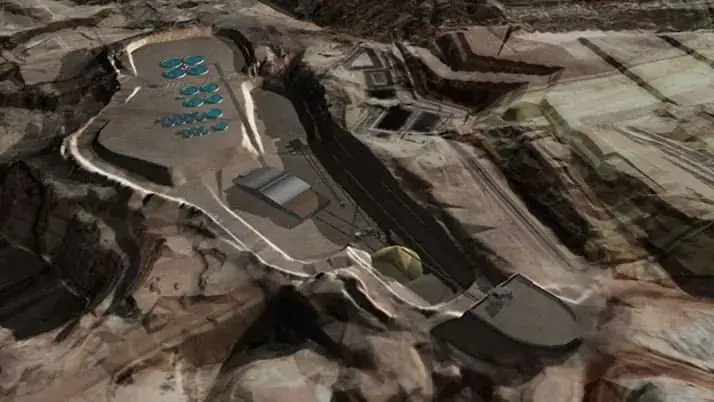
- Mining properties flyover views for stakeholder review