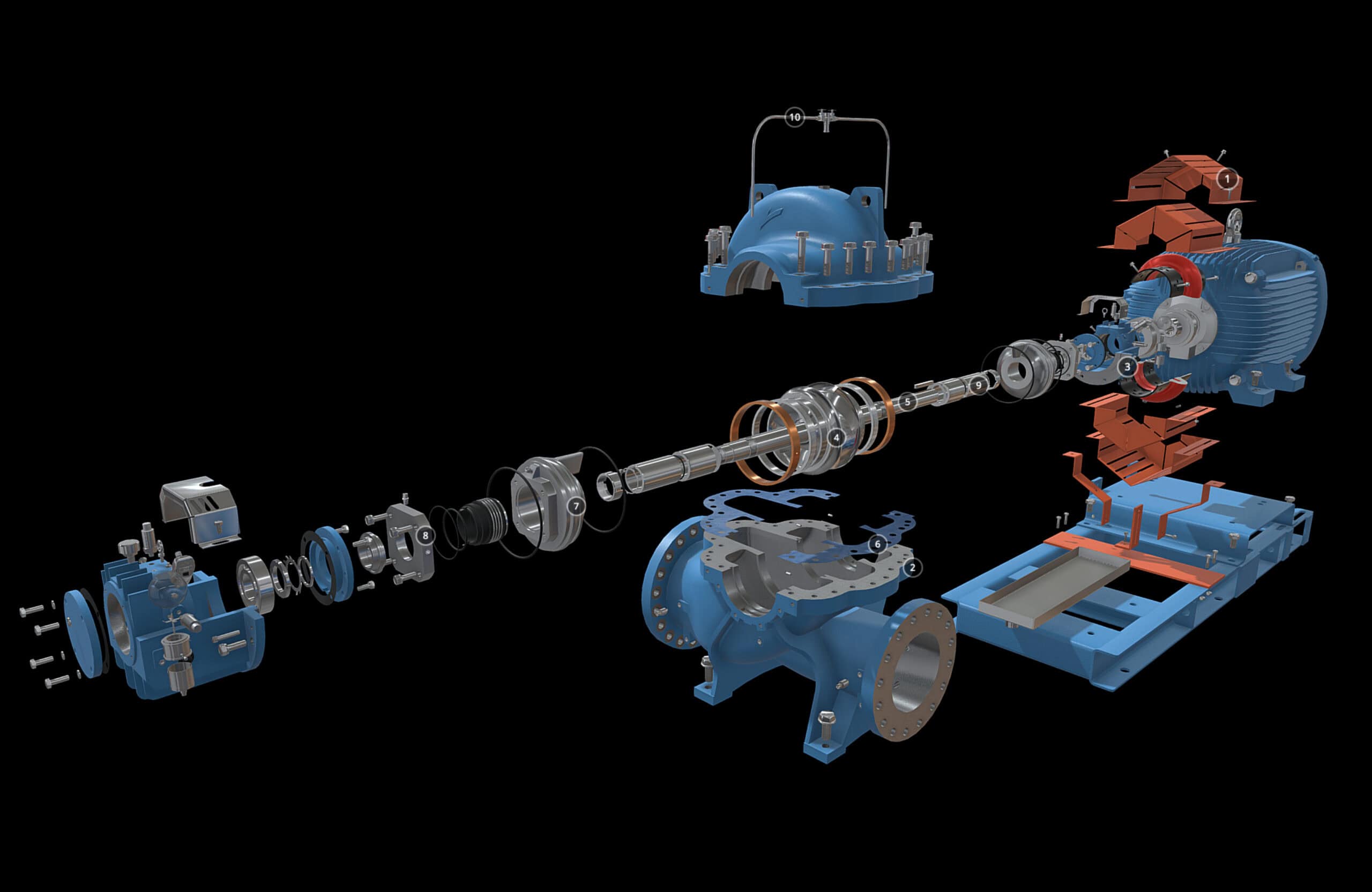
Digital Twin and Virtual Reality in Industrial Operations
You’re seeing virtual reality and digital twins move from optional tools to operational essentials. You can train crews in realistic scenarios, test procedures without shutdowns, and mirror critical assets with live data to spot failures early. In mining, you can rehearse blasts, validate haul routes, and simulate ventilation changes before conditions shift. The value is clear, but adoption isn’t automatic—your next decision is what to pilot first, and how you’ll control it.
Key Takeaways
Industrial VR provides immersive, risk-free training environments to practice workflows, hazard identification, and emergency response without disrupting operations.
Digital twins mirror physical assets and processes using live sensor data, enabling real-time monitoring, simulation, and performance optimization.
Combining VR with digital twins lets teams validate operational decisions and changes in a realistic, data-driven environment before implementation.
Key operational uses include predictive maintenance, asset tracking, and environmental monitoring with alerts for dust, gas, or equipment health thresholds.
Successful rollout starts with a pilot on a critical asset, clear safety and performance metrics, and governance for data access, audit logs, and updates.
What are Virtual Reality and Digital Twins?
Two technologies now anchor modern industrial simulation: virtual reality (VR) and digital twins. With industrial vr, you step into a computer-generated environment that mimics your plant, tools, and procedures. You interact with hazards, controls, and workflows without exposing anyone to real risk. These immersive experiences let you rehearse tasks, verify clearances, and practice emergency responses while keeping operations protected.
An industrial engineer wearing virtual reality headset and holding controllers using VR technology for industrial design, development in CAD software.
A digital twin is a live, data-connected model of a physical asset, process, or facility. You use it to understand what’s happening now, not just what should happen on paper. By combining sensor inputs, engineering models, and operating rules, you run real-time simulations to predict behavior, test changes, and spot unsafe trends early. When you connect VR to a digital twin, you don’t just see a scenario—you validate decisions against current conditions, reduce uncertainty, and strengthen safe, consistent execution, every shift, on schedule.
Top Use Cases in the Mining Industry
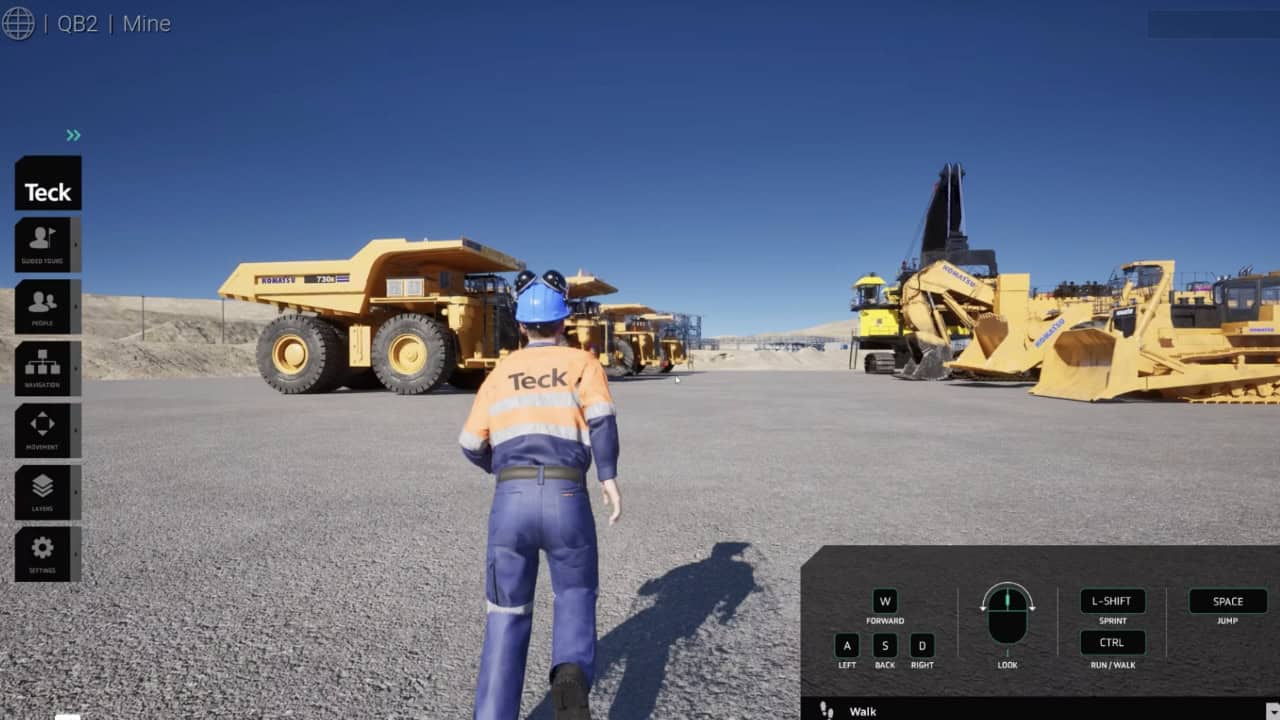
Mining operations benefit most when you pair an immersive industrial virtual reality training with a live digital twin that reflects current equipment health, ground conditions, and production constraints. You can rehearse critical tasks in VR while the twin feeds realistic scenarios drawn from the current shift, so your crews practice safe decisions before they enter active headings.
Run hazard-identification walk-throughs for new headings, with data visualization of ventilation, geotech zones, and exclusion areas
Simulate emergency response: fires, rockfalls, and egress routes matched to today’s working faces
Schedule predictive maintenance by linking vibration, temperature, and duty-cycle signals to failure-risk models
Strengthen asset management by tracking mobile equipment location, utilization, and lockout/tagout status in one view
Perform environmental monitoring by overlaying dust, gas, water, and noise readings on the site model, triggering alerts and corrective actions
You’ll also use the twin to validate blast plans and traffic rules against current constraints, reducing exposure during changeovers.
Benefits of Virtual Reality and Digital Twins
When you connect VR’s immersive simulations to a continuously updated digital twin, you cut risk and cost while speeding up better decisions. You preview changes before they touch real assets, so you avoid unsafe trial-and-error and unplanned downtime. You test operating limits, maintenance windows, and layout options in a controlled environment, then commit only what meets your safety criteria.
You also gain clearer situational awareness. The twin consolidates sensor feeds, inspections, and design intent, while VR turns that information into intuitive data visualization, so you spot clashes, hotspots, and bottlenecks faster. You improve the user experience for engineers and operators by making complex systems easier to interpret and communicate across teams. As conditions shift, you update scenarios quickly, compare outcomes, and document why you chose the safest path. That traceability strengthens compliance, supports audits, and reduces surprises during real-world execution and change management.
Industrial Training and Safety Drills
Step into a realistic virtual reality drill that’s driven by a live digital twin, and you can train teams on the exact equipment, layouts, and hazards they’ll face on site—without putting anyone at risk. You’ll practice critical tasks repeatedly, build muscle memory, and keep every session consistent across shifts and locations. With immersive simulations, you can pause, rewind, and replay incidents to spot errors early and reinforce safe behaviors before they become habits.
Walk down true-to-scale routes for evacuations and mustering
Lock out/tag out the right assets with verified states and interlocks
Respond to alarms, leaks, and fires with timed decision pressure
Perform confined-space entries using correct permits, gas checks, and comms
Run a structured risk assessment, then verify controls in the scenario
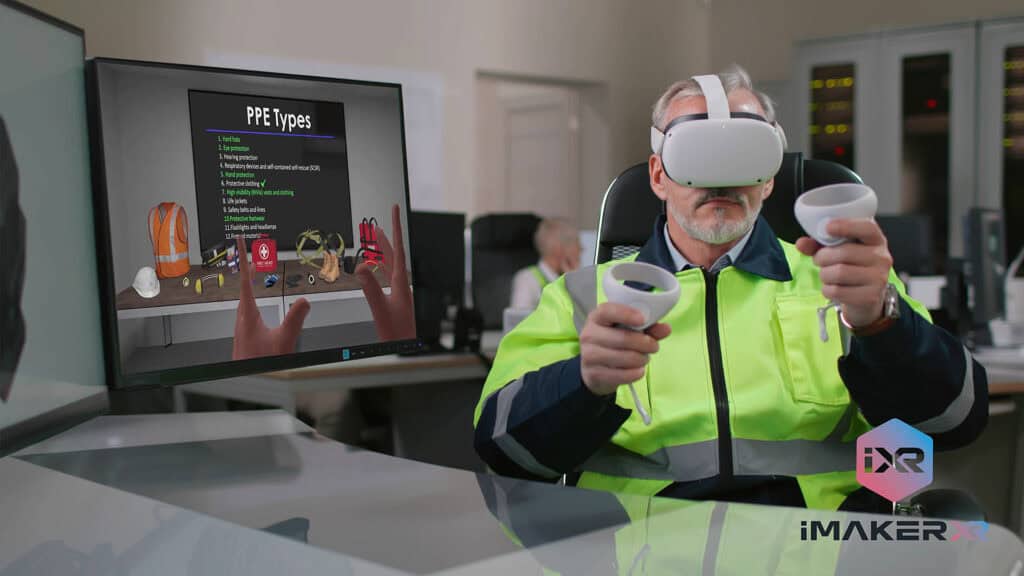
A demo of an Industrial PPE Training in Virtual Reality
You’ll track actions, near-misses, and response times, then coach targeted improvements. When the real situation hits, you won’t be improvising—you’ll be executing safe, proven steps every time.
Rollout Plan: Pilot, Scale, and Governance
Three moves get you from a promising demo to a trusted, plant-wide program: run a tightly scoped pilot, scale only what delivers measurable value, and lock in governance so data, models, and user access stay under control. Start with one critical asset and one high-risk task, then define success metrics: incident reduction, time-to-competency, and maintenance accuracy. Build in risk management early: validate sensor inputs, stress-test failure modes, and run tabletop reviews with EHS, operations, and IT.
When the pilot hits targets, you’ll standardize your implementation strategies: reusable scene templates, model versioning, and change-control tied to MOC. Scale in waves by site readiness, not enthusiasm, and require sign-off after each wave’s safety review. Finally, formalize governance: role-based access controls, audit logs, data retention rules, and a single owner for digital twin truth. You’ll keep training content current and prevent unsafe, unapproved simulations from reaching the floor.
Conclusion
Conclusion
Digital Twin and Virtual Reality are transforming the way industrial operations are designed, analyzed, and optimized. By combining real-time data with immersive 3D visualization, companies can simulate processes, identify risks, and improve performance before costly decisions are made in the field.
From mining and oil & gas to heavy manufacturing, these technologies enhance safety, reduce downtime, and strengthen collaboration between engineering teams and stakeholders. As industries continue to evolve toward smarter, data-driven operations, Digital Twin and VR are no longer optional innovations—they are strategic tools for building safer, more efficient, and future-ready industrial environments.
You’re under pressure to keep crews safe while equipment uptime can’t slip. With industrial augmented reality, you can place hazard zones, lockout steps, and tool guidance directly in a technician’s…
If you’re looking to revolutionize your industrial mining operations, interactive 3D models are the way to go. They enhance site planning, visualize complex terrains, and help you anticipate challenges early. With real-time data visualization,…